
NIMR

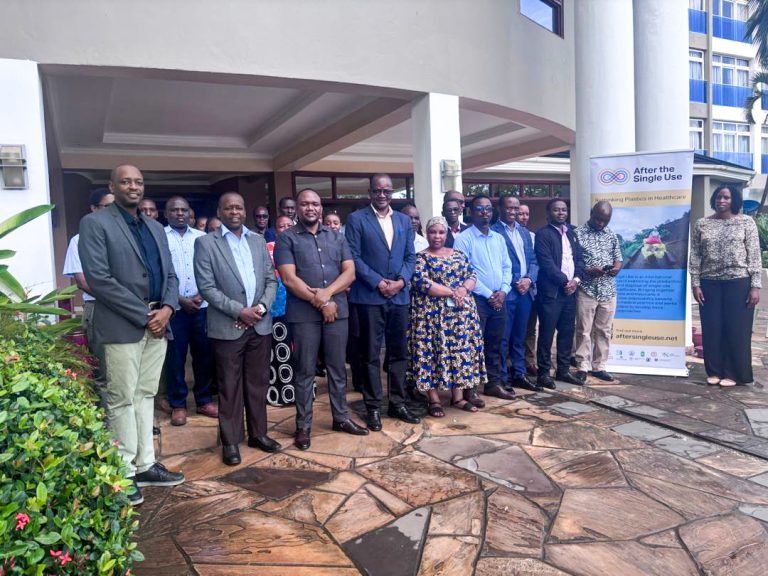
A recent study presented at the 7th Africa Continental World Antimicrobial Awareness Week (WAAW) event has unveiled the “environmental resistome” in Tanzania. Using advanced genomic tools to analyse wastewater and environmental surveillance (WES) from Dar es Salaam and Tanga, pilot sites where the project is being implemented, the study’s preliminary results provide a population-level snapshot of circulating antimicrobial resistance (AMR) genes in environmental ecosystems. The researchers detected signals of resistance to common antimicrobial drugs and pinpointed hotspots of antimicrobial resistance “superbug”. These results offer a complementary tool for surveillance to inform targeted interventions, bridging the One Health gap created by the traditional focus on clinical surveillance, often overlooking the environmental reservoirs of AMR. “Using advanced genomic tools, we tested local wastewater and uncovered a hidden landscape of AMR threats. This environmental surveillance approach provides an early warning tool for public health.” Jackson Claver, Head of Genomics Department, NPHL.
Dr Vito Baraka, Principal Scientist and lead Investigator in Tanzania, explained that “WES of pathogens and AMR is a radar of population health, what goes down our drains tells a story about our community health. This wastewater and environmental based surveillance provide a complementary tool for detecting early signals in our communities including AMR threats, informing targeted public health interventions, and protecting our communities. The approach is effective, empowering preventive actions and enabling us to take precise measures to safeguard our antimicrobial agents.”
Dr Eric Lyimo, co-Investigator in the study highlighted that: “AMR doesn’t respect boundaries, and its cross-cutting issue that need multisectoral and multidisciplinary approach. AMR genes from farms, hospitals, and households can mix in our wasteways and environment. Therefore, protecting our antibiotics requires a integrated approach across through One Health concept, cutting across all sectors including human, veterinary and agriculture and environmental ecosystems.”
The ODIN project, funded by the European & Developing Countries Clinical Trials Partnership (EDCTP3), is a multinational initiative. The ODIN Consortium brings together North-South partners and integrates high-capacity genomic technologies to advance wastewater surveillance for public health impact. The consortium brings together partners from the National Institute for Medical Research (NIMR) and National Public Health Laboratory (NPHL) in Tanzania, the University of Kinshasa (UNIKIN) in DR Congo, and the Institut de Recherche en Sciences de la Santé (IRSS) in Burkina Faso together with NORCE (Norway), VIB-UGent (Belgium), the TGHN University of Oxford’s Global Health Network (UK), the Finnish Institute for Health and Welfare (THL), and Lund University, Sweden. This collaborative platform is dedicated to exchanging technological innovation, strengthening capacity, advancing methodological approaches in WES and translating pathogen genomic data into actionable public health intelligence. This collaborative model ensures that surveillance tools are co-developed, context-specific and validated within the local settings. The project also focused on capacity strengthening to create and strengthen a scalable blueprint for WES across sub-Saharan Africa. #MinistryOfHealth #NIMR #NPHL #WastewaterAndEnvironmentalSurveillance. #AdvancingHealthResearch#EnhancingLife#ODIN#WES

Section Title

NIMR Yawajengea Uwezo Watumishi Wake Kupitia Mafunzo ya Kitaaluma

Taasisi ya Taifa ya Utafiti wa Magonjwa ya Binadamu (NIMR) imeendelea kuonesha dhamira yake ya kuwekeza katika maendeleo ya rasilimali watu kwa kushiriki Mkutano wa 13 wa Kitaaluma wa Chama cha...

NIMR Yaandaa Mpango wa Manunuzi 202627 kwa Lengo la Kuimarisha Ufanisi na Tija

Taasisi ya Taifa ya Utafiti wa Magonjwa ya Binadamu (NIMR) imeandaa Mpango wa Manunuzi kwa mwaka wa fedha 2026/27, hatua inayolenga kuongeza ufanisi katika manunuzi ya umma na kuhakikisha utekelezaji...

NIMR Yatoa Huduma za Afya Bure kwa Mamia, Yaadhimisha Mei Mosi 2026 kwa Vitendo

Taasisi ya Taifa ya Utafiti wa Magonjwa ya Binadamu (NIMR) imeadhimisha Siku ya Wafanyakazi Duniani kwa vitendo kwa kutoa huduma za afya bure kwa wananchi katika vituo mbalimbali nchini, hatua...

MFANYAKAZI HODARI WA NIMR 2026

Lorem ipsum dolor sit amet, consectetur adipiscing elit. Ut elit tellus, luctus nec ullamcorper mattis, pulvinar dapibus leo...

WAFANYAKAZI HODARI 2026 NGAZI YA TAASISI

Lorem ipsum dolor sit amet, consectetur adipiscing elit. Ut elit tellus, luctus nec ullamcorper mattis, pulvinar dapibus leo...

NIMR Launches Project to Strengthen Mpox Outbreak Prediction in Tanzania

The National Institute for Medical Research (NIMR), on 30th April 2026, officially launched a new project aimed at strengthening Tanzania’s capacity to predict and respond to Mpox outbreak using...

Wanawake wa NIMR Mbeya Watoa Zawadi kwa Kliniki za Utafiti wa Afya Kusaidia Washiriki

Wanawake wa Kituo cha Taasisi ya Taifa ya Utafiti wa Magonjwa ya Binadamu (NIMR) Mbeya wametoa zawadi za mashuka kwa kliniki za utafiti zinazotumiwa na kituo hicho ili kusaidia washiriki wa tafiti...

NIMR Yafanya Mkutano wa 17 wa Baraza Kuu la Wafanyakazi, Yajadili Mpango Mkakati wa 2026–2031 na Bajeti ya 2026/2027

Taasisi ya Taifa ya Utafiti wa Magonjwa ya Binadamu (NIMR) leo tarehe 21 Aprili 2026, imefanya Mkutano wa 17 wa Baraza Kuu la Wafanyakazi katika Ukumbi wa Mikutano wa St. Gasper jijini Dodoma, ukiwa...

NIMR Strengthens International Collaboration in Tuberculosis and Diabetes Mellitus Research at PROTID Annual General Meeting

The National Institute for Medical Research (NIMR) has continued to emphasize the importance of international collaboration in advancing research, training, and innovation aimed at addressing the...

Lorem ipsum dolor sit amet, consectetur adipiscing elit. Ut elit tellus, luctus nec ullamcorper mattis, pulvinar dapibus leo.